
Novel Form-Free Installation Method for Refractory Castables
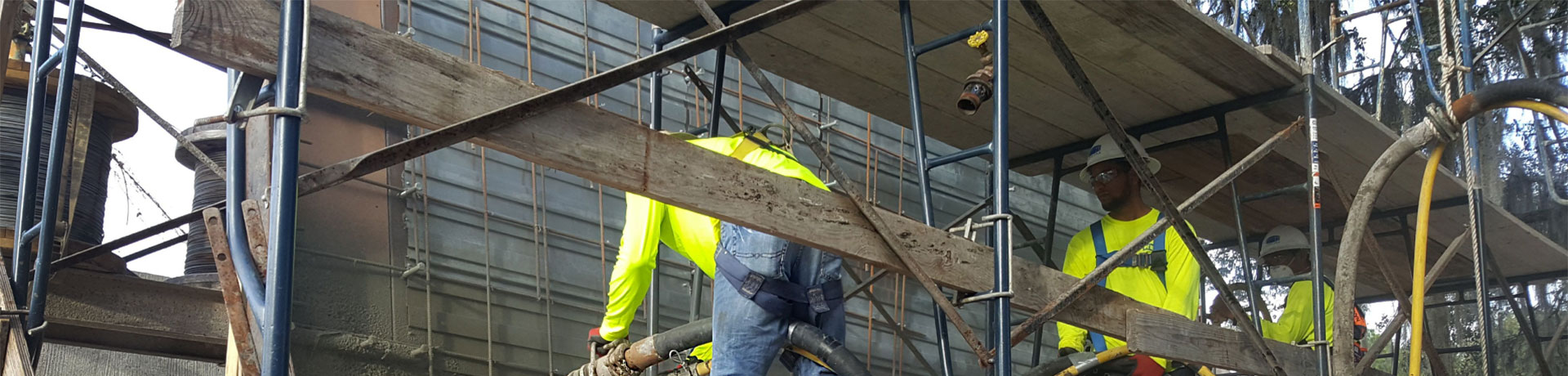
After a brief history of different installation modifications, this paper introduces a novel installation technique, which enables form-free placement of low cement and fully dispersed castable compositions. The method does not require the typical wet pumping equipment, as is needed for shotcreting, but delivers similar lining properties.
Safety Shooter : Create a Pre-Site Checklist
Whenever possible, try to pre-site all construc-tion projects before scheduling personnel and equipment. A little extra planning ahead of the actual work can save a lot of headaches later on.
Carl Akeley – A Tribute to the Founder of Shotcrete
I only recently joined the American Shotcrete Association. But, in reading through the issues of Shotcrete and ASA™s excellent brochure, I was struck by how little seems to be known about Carl E. Akeley, the man to whom we all owe our livelihoods. What™s more, I™m told by the litera-ture that he invented the cement gun œto apply mortar over skeletal matrices to form the shapes of prehistoric animals (not true); that he was a Doctor (his schooling was limited to three or four years of grade school); and that the œdevelopment of the original cement gun started in 1895 (it actually started twelve years later).
Welcome to Underground Atlanta
We are standing in the very bowels of the City of Atlanta. This isn™t the trendy œUnderground Atlanta of rock-till-you-drop nightclub fame. The millions of busy Atlanta citizens above us today don™t have any idea that we are down here. All they care about is that when they flip the little silver lever on the water tank, everything that is disagreeable goes somewhere else.
Where it goes, how it gets there, and what happens to it is our job. This 12-ft-diameter, man-made cavern known as the Highland Creek Trunk Sewer Interceptor stretches seemingly forever before and behind us. The professional shotcrete applicators of the Coastal Gunite Construction Company are here placing a new, biologically active gunite in this sewer interceptor. The Department of Public Works is here to inspect the rehabilitation work as Coastal Gunite recoats the interior of the Highland Creek Interceptor with this new bacteria-fighting gunite material.
Shotcrete for Ground Support: Current Practices in Western Canada
Each ground-support project is unique and will likely have its own design and performance re-quirements. Performance requirements for shotcrete can generally be divided into two groups: fresh state parameters and hardened state parameters. The following briefly elaborates on the variables included in each of these groups.
The water/cementitious materials ratio is one of the most important parameters controlling shotcrete quality and performance under long-term conditions. In cases where the shotcrete may be exposed to severe environments, the water/cementitious materials ratio would be limited to a specified maximum value, e.g., 0.40. Also, limiting the water/cementitious materials ratio helps reduce shotcrete shrinkage.
Having an adequate air content and air-void spacing factor in the as-placed shotcrete mixture has long been recognized as critical for frost resistance of wet-mix shotcrete. Usually, in wet-mix shotcrete, an as-batched air content of approxi-mately 8 to 10% is used to achieve an as-shot air content of 3 to 5%. However, even if frost resistance is not a concern, there is a definite advantage in using a high air content during batching of shotcrete in that the air entrainment enhances the workability (slump) of the shotcrete. Upon impact on the receiving surface, the air content is reduced, resulting in a reduction in slump in the in-place shotcrete. In projects where the use of accelerators is specified, this slump-killing effect helps reduce the amount of accelerator required to provide slump reduction and shotcrete adhesion.14
The required slump of wet-mix shotcrete for a particular application depends on the specific
Determination of Early-Age Compressive Strength of Shotcrete
Tere has long been a need for a reliable, simple-to-use means of determining the early-age rate of strength gain in shotcrete.During approximately the first 24 hours after shotcrete has been placed, its compressive strength is typically too low to measure using standard core-extraction and testing procedures. Monitoring the rate of early-strength development in shotcrete is important in tunneling, mining, and other applications such as the underpinning of structures. Recent studies by the authors have demonstrated that there is a simple, direct method for determining the early-age compressive strength development of shotcrete. It involves the shooting of a set of beams in a standard steel mold and testing the beams after stripping, using an adaptation of ASTM C 116, œStandard Test Method for Compressive Strength of Concrete using Portions of Beams Broken in Flexure. This œTechnical Tip describes a procedure for deter-mining the compressive strength of shotcrete beams and presents results of tests conducted with plain and accelerated shotcretes produced by both the wet- and dry-mix shotcrete processes.
Innovating with Shotcrete
Shotcrete Meets the Challenge of Huge Water Project in Ecuador
Shotcrete Meets the Challenge of Huge Water Project in Ecuador replacing traditional œform-and-pour reinforced concrete construction methods with high-production shotcrete, the massive Trasvases Manabi Water Project in Ecuador was finished months ahead of schedule. Contractor Norberto Odebrecht, in conjunction with Shotcrete Technologies, Inc., of Idaho Springs, Colorado; and Commercial Shotcrete, Inc., of Higley, Arizona, placed over 6000 m3 (7800 yd3) of shotcrete in less than half the time it would have taken by the specified œform-and-pour method. They put the project an entire rainy season (approximately four months) ahead of schedule.
Design Guidelines for the Use of FIber-Reinforced Shotcrete in Ground Support
Developments in Shotcrete in Hobart, Tasmania, Australia in April 2001. One of the outstanding papers presented at the Conference was a paper by Grant, Ratcliffe and Papworth on œDesign Guidelines for the use of SFRS in Ground Support. Frank Papworth was asked to submit an updated paper on the subject for publication in the ASA Shotcrete Magazine and so here it is. It is more technical than most of the papers published in the ASA Shotcrete Magazine, but was selected because it was considered that it would be of considerable value to designers of fiber-reinforced shotcrete linings for ground support in civil and mining applications.
Abstract: There are presently no design guide-lines based on toughness for the use of fiber-reinforced shotcrete (FRS) in ground support for underground mine development. Typically, in the Australian mining environment, the approach to the use of FRS has been one of borrowing experiences from other mines and a œtrial-and-error method of design, installation, and assessment. There is a need for a ground support design guide that can be simply applied by œfront-line personnel.
This paper provides an overview of the performance characteristics of FRS and how the various shotcrete guides specify its use. Practical experiences with the use of FRS in Australia and Canada in various applications and ground conditions are combined with existing empirically based ground support-design methods to develop a ground support guideline that incorporates the concept of toughness. An assessment of structural synthetic fibers shows that their low modulus makes their performance characteristics different from those of steel fibers, and that they are not likely to be economical in linings where crack widths are limited, but that they are preferable where large deflections are permissible.
ˆ˙Ë
Fiber-reinforced shotcrete (FRS) has been used successfully for ground support for more than