
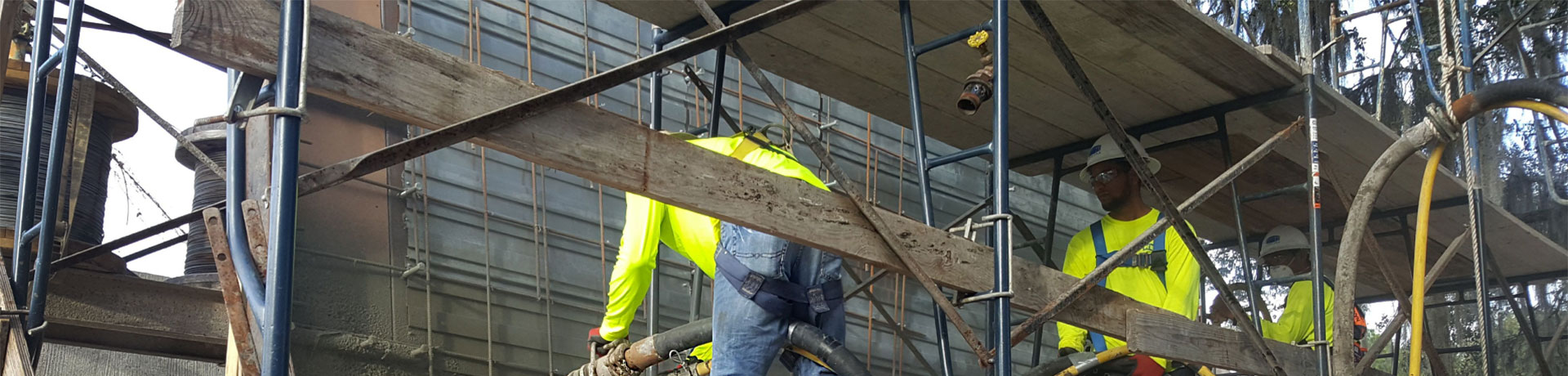
The Department of Justice (DOJ) Headquarters, 951 Constitution Ave. N.W., Washington, DC, has been undergoing major rehabilitation and renovation. Work started in 2001 and continued into 2002. Gilbane Building Co. is the prime contractor on the site, but there are many subcontractors involved in restoring the DOJ building. Coastal Gunite Construction Co.,
The Art of Tunnel Rehabilitation with Shotcrete
The art of rehabilitation of tunnels has flourished and developed significantly over the last couple of decades. Several hundred railroad, highway, and conveyance tunnels have been successfully rehabilitated, converted, and/or enlarged. Much of this development can be attributed to the successful use of steel fiber-reinforced shotcrete. The flexibility and adaptable nature of steel-fiber microsilica shotcrete is ideal for rehabilitation of tunnels. Thanks to shotcrete, enlargement and rehabilitation of tunnels without fully taking the tunnel out of service is not only technically but also economically feasible consid-ering the cost of other alternatives including the œdo nothing alternative. Enlargement was usually accomplished by raising the crown but some have been enlarged by lowering the invert, which is much more difficult and time-consuming.
Safety Shooter: Guilty through Association Wall Forms and Rebar Safety Tip
I remember doing a job in San Francisco, CA, about nine or ten years ago. The job consisted of building a basement in an existing commercial area. There were buildings on both sides of the new proposed basement. The construction called for the new basement walls to be built on the property line with a 2-in. foam spacer”the perfect shotcrete job!
Certification vs. Qualification of Shotcrete Nozzlemen
In 2000, ACI, in cooperation with ASA, estab-lished a formal certiï¬cation program for certifying shotcrete nozzlemen. Prior to that date, ACI had a guideline document for certifying nozzlemen, but it was not being uniformly applied, it contained outdated features and appli-cations, and it was not being universally accepted nor endorsed.
Shotcrete in Fires: Effects of Fibers on Explosive Spalling
In those of us in the concrete industry, the events over the last year have caused many of us to focus on the effects of blasts and fire on concrete structures. Information on the effects of fire on normal strength concrete (NSC) less than 7000 psi (50 MPa) has been available since the 1950s.1 On the other hand, little information on the behavior of high-strength or high-performance concrete (HPC) in fires has been developed until recent times, particularly with reference to thermal shock (high temperature rise rates) and sustained high temperatures.2
Tieton Dam Spillway Rehabilitation
Johnson Western Gunite Company rose to the challenge of rehabilitating the Tieton Dam Spillway in Yakima, WA. The spillway, built originally in 1924, was showing significant deter-ioration due to freezing and thawing, weathering, and erosion due to high-velocity water flow. The owner, the United States Department of the Interior Bureau of Reclamation, designed a repair consisting of a 12-in.-thick (300 mm) reinforced, cast-in-place concrete overlay on the floor and left wall if one was looking downstream. The budget in the original contract was not sufficient to overlay the right wall.
Influence of Construction Joints in Wet-Mix Shotcrete Panels
Where a section of shotcrete is left incom-plete at the end of a shooting shift, some provision must be made to ensure that the joint will not develop a plane of weakness at this point. According to the American Concrete Institute™s œGuide to Shotcrete1 and the œUnified Facilities Guide Specifications,2 construction joints should be tapered to a shallow edge form, about 25 mm thick. (1 in.) Therefore, in North America, contract specifications will typically require that shotcrete construction joints be tapered to a 45-degree edge and be thoroughly cleaned and wetted prior to the application of additional shotcrete. When welded wire mesh re-inforcement is used, some contractors will also overlap two layers of mesh at the expected location of construction joints in the antici-pation that the shotcrete at the joint may be weaker than the unjointed portions of the shotcrete.
Soil and Rock Slope Stabilization Using Fiber-Reinforced Shotcrete in North America
Shotcrete Repair in Paper Mill
March 2002, and May 2002. Work was conducted inside process vessels in a pulp mill by the specialized lining contractor, Canadians Stebbins Engineering Ltd., and the shotcrete contractor, Béton Projeté M.A.H. Due to operational constraints and significant costs involved with downtime, the contractors™ primary goal was to perform a repair that would provide long-term reliability within the shortest construction period possible.
Calcium Aluminate Technology and It’s Application in Refractory Shotcrete
The use of calcium aluminate cement as the binder in refractory systems in general, and refractory shotcretes in particular, is widely approach to high-performance refractory shotcrete involves the use of calcium aluminate aggregates along with the calcium aluminate cement. The addition of this unique aggregate imparts enhanced properties to shotcretes, enabling them to endure the toughest of industrial environments.