
An extension to the Quebec City Zoo in Quebec City, Canada, will incorporate over 100 acres of new landscaping that will house more than 500 animal species from five different continents. The Jardin Zoologique construction project will host a new zoological garden that will be used to exhibit a spectacular expansion of its bird collection as well as an accentuation and harmonization of its horticultural infrastructures. The architects on the project (a European and Quebec collaboration) are specialists in the field of architectural shotcrete and were asked to investigate various available options for the design of the architectural exhibits of this important new zoo expansion. Atelier Artistique du Béton
Sissach’s Saved by a Bypass
The small village of Sissach, near Basel, in Switzerland is one of the nicest Swiss villages in the country, but the serenity is plagued each rush hour by heavy commuter traffic. The solution was a bypass tunnel running through the Chienberg hill to the north side of the village. Shallow cover, unconsolidated material at the portals, a TBM pilot tunnel, and the potential for squeezing ground conditions distinguish the Sissach tunnel from many tunnels currently under construction in Switzerland.
The 2284 m (7500 ft) long Sissach bypass tunnel runs a maximum of 120 m (395 ft) beneath the Chienberg hill and beneath the picturesque homes of the Sissach village. It was originally intended to run the two-lane bidirectional bypass up and over the hill on the surface, but protests by the local villages forced the local Canton government to adopt an underground route for the heavy commuter traffic currently passing through the village.
To accommodate the shallow underground route, the alignment is divided into three separate sections: a section of 550 m (1800 ft) cut-and-cover and 200 m (656 ft) cover and cut on the west end, followed by a 1440 m (4725 ft) length of mined tunnel, and a 94 m (308 ft) section of cut-and-cover at the east end.
The first 550 m (1800 ft) of cut-and-cover on the west end of the project was completed under a separate contract and included the boxed section over the Ergolz River. The contract for the main bypass civil works, including the mined tunnel, was awarded to the Arge Chienbergtunnel Sissach, a joint venture led by the Batigroup, Switzerland™s
Shotcrete for Underground Support IX
The Japan Tunnelling Association (JTA) and International Tunnelling Association (ITA) sponsored the Shotcrete for Underground Support IX Conference held in Kyoto, Japan, from November 17-20, 2002. It is a cooperative conference with the United Engineering Foundation, New York, which sponsored the previous eight conferences, the first of which was held 30 years ago. A total of 35 papers were presented at the conference, 34 of which are published in a proceedings available from the JTA. The conference was chaired by Koichi Ono, Professor, Kyoto University, Japan, and co-chaired by D. R. (Rusty) Morgan, Chief Materials Engineer, AMEC Earth & Environmental Limited, Vancouver, British Columbia, Canada.
The conference was a resounding success. It was attended by over 70 delegates, with papers from Japan, South Korea, Vietnam, India, Canada, Brazil, France, Finland, Norway, and Switzerland. Keynote addresses were given by Koichi Ono from Japan on œShotcrete Use in Tunnelling Works in Japan (over 2 million m3 per annum); Minema Ikoma from the Japan Railway Construction
Shotcrete Pump
The shotcrete pump. Every shotcrete crew needs one. Unfor-tunately, the pump that pushes all the material we need to do our job gets more abuse than any of the other equipment. Pumps come in various sizes and shapes, anywhere from a trailer single axle to a boom truck or robot. They all have one thing in common: they pump concrete at very high
What You need to know about Wet-Mix Shotcrete
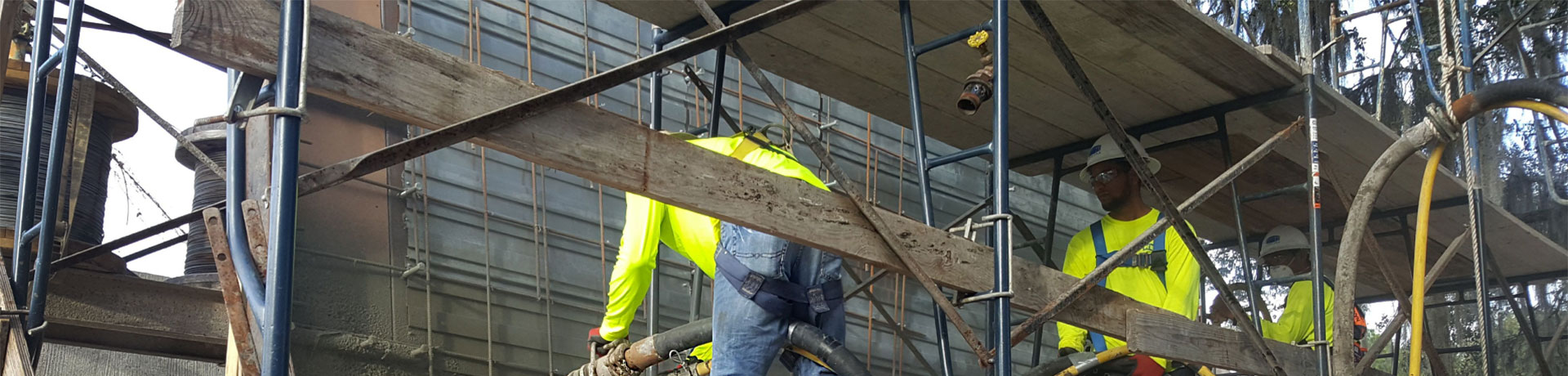
Wet-mix shotcrete is a mixture of cement, aggregates, and water that may contain admixtures, which is hydraulicallypumped to the nozzle where compressed air is added to provide high velocity for placement and consolidation of the material on the receiving surface. The purpose of this article is to illustrate the uses of wet-mix shotcrete for small (repair), medium, and large output applications. There are several factors that dictate good wet-mix shotcrete practices: the right concrete pump for the job; a suitable mix design; the right nozzle (for the best material velocity); the distance the material has to be pumped; crew experience; good nozzling technique; and implementation of proper safety precautions for the pump and the hoses, including the clamps; and the overall safety of the workers.
Dry-Mix Guns
Basically, three different types of shotcrete guns exist for the dry-mix process, all of which work on the suspension-conveying principle. Used occasionally today, was invented by Carl E. Akeley in 1907.1 It employs two connected chambers arranged one above the other, with the discharge outlet at the bottom of the lower one. The feed opening of the upper chamber and the connection between the two chambers can be closed off hermetically with bell-shaped valves independently of one another. The bottom chamber is subjected to the same air pressure as the discharge line. The procedure starts with dry mix being filled into the upper chamber with the bell valve between the two chambers closed. Next, the feed opening is closed hermetically and the upper chamber is pressurized just like the lower one. Now the valve between the two chambers can be opened, allowing the mixture to slide from the upper into the lower chamber. After this has happened, the valve between the two chambers can be reclosed and the pressure released in the upper chamber to permit reopening of the inlet valve. In the meantime, the dry mix is discharged from the lower chamber by a pneumatically driven feed wheel and is picked up by the air stream in the discharge line. The upper chamber is refilled at the same time, and the cycle is repeated.
Silica Fume in Shotcrete
Silica fume is a highly pozzolanic mineral admixture that has been used mainly to improve concrete durability and strength and as portland cement replacement. Silica fume has been used primarily in the United States, Canada, and the Scandinavian countries, but is now finding increasing use elsewhere in the world.
Development of a Centrifugal Sprayed System for Shotcrete Application
A new Japanese Ministry of Health document provides regulations and guidelines for the allowable dust concentration in tunnel works. The recommended maximum concen-tration should be less than 3.0 mg/m3 (2.3 mg/y3) at 50 m (164 ft) from the tunnel face. To observe this guideline, it is a serious problem as to how to reduce the generation of mineral particles of dust during shotcreting operations. In general, shotcrete is placed using pneumatic energy. This is a main factor causing dust generation during shotcrete operations. It may be easily imagined that if shotcrete application can be conducted by centrifugal force, dust concentration would be dramatically reduced. In this paper, we describe the development of a centrifugally sprayed shotcrete system named Dustless Shotcrete and also provide the results of a practical application of this technology at the Hishino Tunnel.
Steep Slope Stabilization with Fiber-Reinforced Shotcrete
For the past 150 years or so, roads have been built through the mountain passes in the western U.S. and Canada. Sometimes these roads led to mines; sometimes they started as logging roads. Some were built for access roads for the railroad. Many were built so that people could drive wagons, stagecoaches, and later, automobiles to their destinations. As time went on, some of these roads were abandoned, while others were turned into highways and scenic byways. These roads can be seen on maps, criss-crossing through mountain passes, valleys, and wherever passage was possible. Many of these roads were constructed along mountain slopes, carved out using the largest equipment available at the time, sometimes by hand work, and sometimes by blasting through rocky areas. Road conditions in some of these areas can change dramatically throughout the year. In the mountains, vast amounts of snow can accumulate during the course of just a few days. Sometimes there are heavy rain storms. There can be snow avalanches and mudslides from the rain and snow. In times of drought, vegetation might dry out and die, leaving slopes exposed to erosion, increasing the probability of avalanches and mudslides. Because of varying climactic conditions, freezing-and-thawing cycles, radical changes in the amount and nature of moisture, steepness of slopes, and other factors, slopes need to be stabilized so that rocks, trees, debris, and other factors not listed do not unearth them-selves and become hazards to all things below them. One of many ways to secure and stabilize highway slopes is by the use of ï¬ber-reinforced shotcrete (FRS), usually along with either rock bolts or some other mechanical device drilled into the rock or slope. This paper provides an overview of why ï¬ber-reinforced shotcrete is an excellent choice in lieu of plain shotcrete reinforced with either welded wire mesh or rebar mats for such slope stabilization work.
Concrete Domes- A Flexible Building Solution for the 21st Century
Although concrete domes have been around for a long time, they are still sometimes considered as unique or unusual structures. Insulated concrete domes have been built for a multitude of uses for many years throughout the world. An interest in concrete domes for architectural applications, however, has not been as great as for industrial domes, but that is changing. Domes provide tangible beneï¬ts”safety, durability, and economy”features which are desirable in all structures no matter what their shape. So why are domes now becoming the shape of the future?