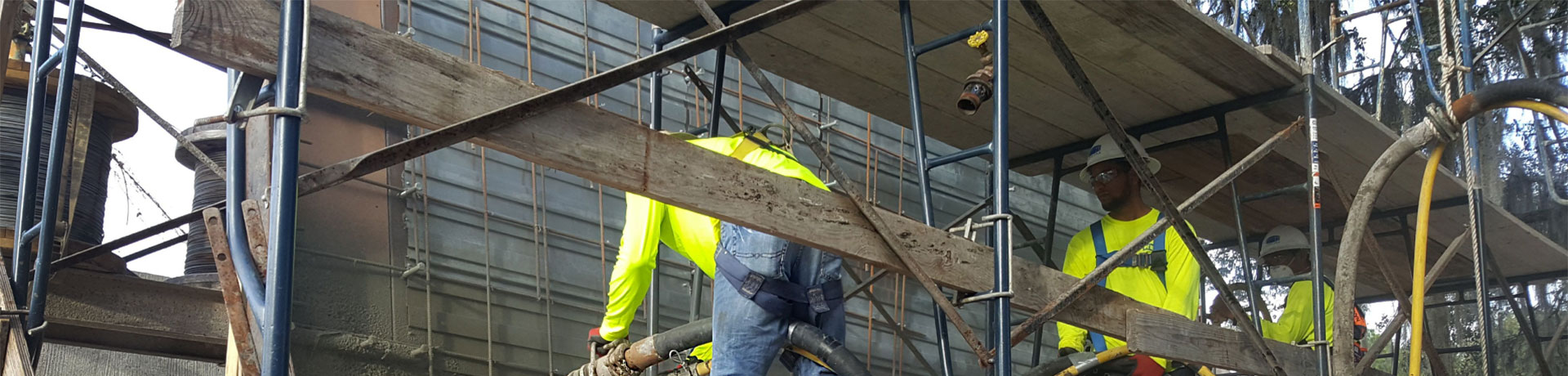
Shotcrete rebound varies for many different reasons, many of which you mention in your question. The water seepage must be controlled or the shotcrete will likely not adhere to the surface and will slough off as the water saturates the fresh shotcrete. Accelerator will help, but it is difficult, if not impossible, to achieve good results against a seeping surface. ACI 506R-05, “Guide to Shotcrete,” estimates approximate range of shotcrete losses from 10 to 30%. Some other factors affecting the percentage of rebound are:
Mixture design
- Shotcrete process (wet- or dry-mix)
- Concrete mixture design and materials (for example, microsilica will tend to create less rebound; more than 30% coarse aggregate can cause more rebound)
- Plastic concrete properties (air content, slump)
- Nozzleman competence
- Vertical placement generally has less rebound than overhead
- Thickness of buildup per layer
Reinforcing grid
- Size and spacing of reinforcing
- Stability of reinforcing grid
All of your points are valid, but the Engineer of Record or the owner makes the final decision on recognizing a composite system or ignoring the value of the initial layer. As your experience shows, shotcrete provides an excellent bond between freshly placed layers and properly prepared concrete or shotcrete substrates. There are many articles available in the Shotcrete magazine archives—found on our website, —that may provide the designer or owner more information to allow them to make their design decision.
The Federal Highway Administration’s “Manual for Design & Construction of Soil Nail Walls” should address this issue. Many soil nail wall systems incorporate a drainage ditch at the top of the wall that catches the runoff and takes it to the ends of the wall. Your concept of a catch basin and drain between the layers is not something we have seen in the past and we are not qualified to express an opinion on this. We have seen systems with catch basins at the top of the wall and the drains behind the initial layer of shotcrete requiring notching the subgrade. To answer your question, yes, a 6 in. (152 mm) pipe can be fully encased in shotcrete between the layers. Complete encasement of an embedment of this size needs an experienced shotcrete nozzleman with properly sized equipment, appropriate concrete mixture design, and a trained shotcrete crew. The issue of appropriateness of the approach is better answered by a licensed professional engineer familiar with soil nail systems or retaining walls, and shotcrete/concrete.
Installing a shotcrete lining requires a somewhat dry substrate and certainly is not compatible with running water. The water needs to be blocked or diverted.
A means of blocking the inflow is to inject a swellable urethane grout through the openings in the existing pipe. The grout, if done properly, will expand upon contact with water and seal the outside of the pipe. Another means of diverting the water is to install drainage material over the inflowing area to collect the water and remove it from the pipe. The shotcrete can then be applied over the drainage material.
Shotcrete can and has been used to overlay previously installed shotcrete or concrete that has cracked over time. It would be advisable that you engage an engineer knowledgeable in geotechnical engineering and concrete properties to formalize a solution. It is important that the cause of the cracks be determined and adequate reinforcing be designed to ensure that the cracks do not propagate through the overlaid shotcrete.
Shotcrete can be applied with many different textures. The nozzle finish shown is very rough, even for a natural gun finish. Nozzle finishes can be done smoother than this. Another technique would be to use a broom to make it smoother after it is shot. Other finishes include wood float, rubber or sponge float, broom, and smooth trowel finishes. There are many examples of finishes shown in articles in Shotcrete magazine.
There are many products in the marketplace for repairing cracks. Because shotcrete is simply a method for placing concrete, any method for concrete crack repair would be applicable. It would be wise to use a product that filled the cracks and is able to tolerate thermal movement in the future (not a brittle product). Many injectable polyurethane grouts can accomplish this. Surface-applied coatings would need an adequate thickness and elasticity to tolerate moving cracks. We suggest that you contact one of our corporate members who is familiar with your area and get their specific advice. Please refer to “ASA’s Buyers Guide”.
Shotcrete is simply a placing method for concrete. Thus, the in-place material properties are essentially the same as cast concrete. A specific value for the shear is beyond the scope of our Association because many design and material properties can affect the shear capacity. We would suggest you engage a Professional Engineer who specializes in Underground Shotcrete. You should consult our Buyers Guide to find such a consultant. ACI 506R-05, “Guide to Shotcrete”, would be a helpful primer to learn more about shotcrete.
Shotcrete is a method of placing concrete and properly placed shotcrete should have a service life similar to cast concrete. Generally, concrete structures in normal environmental exposures are expected to have service lives from 50 to 100 years. With particular attention to materials and construction methods, some concrete structures, such as the new San Francisco Bay Bridge, have been designed for a service life up to 150 years. The first step in achieving a long-lasting, high-quality installation is to engage a highly qualified and experienced shotcrete contractor. There are many other factors that influence service life, including using the right mixture design for the anticipated exposure conditions.
For concrete piers, the reinforcing steel is generally secured to the piles with reinforcing bar grouted dowels. For steel piles, the reinforcing bar is generally secured with Nelson studs.