
Building a swimming pool on the edge of a cliff can be an exciting and challenging project, especially when using shotcrete as the main building material. Shotcrete is chosen for its strength, durability, and ability to create complex shapes, which is essential for a pool in such a unique location.
SOUTH EAST ASIA JUNGLE TRACK AUCKLAND ZOO
Aqua-Environs Construction was subcontracted to provide shotcrete installations as a part of our broader scope of work: construction services to create a naturalistically themed terrestrial and aquatic habitats for Auckland Zoo’s new South East Asia Jungle Track (SEAJT), the Zoo’s most ambitious project in its 99-year history. Our company utilized shotcrete to help create natural, realistic animal habitat areas as well as public spaces to achieve engaging natural environments for animals and fish in the zoo’s care and for the zoo’s visitors.
SHOTCRETE AT MT PLEASANT STATION
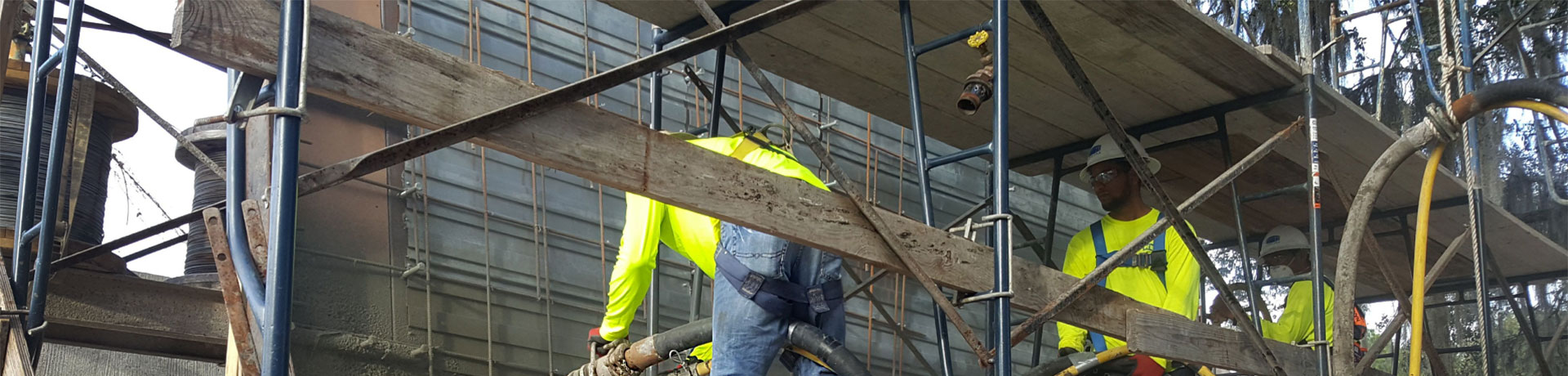
Multi-million dollar underground stations are currently under construction on Metro and LRT lines in Toronto, Ontario, Canada. Traditionally, the thick, heavily reinforced structural concrete station walls have been constructed using the conventional form-and-pour concrete construction method. This construction method, while widely used, is not without its challenges.
Many of the underground station sites are in congested urban areas with limited spaces for laydown of concrete formwork, and crane access time for handling and installation of formwork is often on a critical path for completion of station construction.
Outstanding International Project
Sorry, we don't have any articles to show you. We will add relevant articles as they become available.
ASA Outstanding Shotcrete Awards Program
The ASA Outstanding Shotcrete Project Awards Program exists to recognize excellence and innovation on projects in which the application of shotcrete has played a significant role.
ASA’s Annual Outstanding Shotcrete Project Awards Program provides an exciting real-world demonstration of the exceptional advantages of placing concrete via the shotcrete process. Many sustainability advantages are also inherent in the shotcrete process and play a significant role in winning projects as well as the project owner’s ultimate decision to use shotcrete as the method of concrete placement. Projects can be submitted in the following areas:
- Underground
- Architecture | New Construction
- Infrastructure
- International Projects
- Pool | Skatepark
- Repair | Repurpose
To assist in your submission, we have provided submission resources to inform you of the submission guidelines, a list of questions, and a copy of the owner release form. Please email any questions to [email protected].
Award Archive
2025 – Twenty First Annual Outstanding Shotcrete Project Awardees
Shotcrete’s many advantages are seen in creative construction around the world. Shotcrete’s adaptability to local materials, environmental elements, and climates further illustrates shotcrete’s ability to serve on any project. Shotcrete Nozzleman certification is also a respected credential around the world, and more and more countries recognize the American Shotcrete Association’s role in raising the standards for education and application to ensure quality projects.
The ASA Technical Questions and Answers is a free service offered to all users, but primarily intended for engineers, architects, owners and anyone else who may be specifying the shotcrete process and/or has need for a possible answer to a technical question.
User agreement: The answers provided to submitted questions are intended for guidance in planning and executing shotcrete applications. This information is intended only for the use of individuals who are competent to evaluate the significance and limitations of its content and recommendations, and who will accept responsibility for the application of the material it contains. The American Shotcrete Association provides this information based on the best knowledge available to them and disclaims any and all responsibility for the information provided. The American Shotcrete Association will not be liable for any loss or damage arising therefrom.
If you are unable to find what you are looking for in the archive, then submit a new technical question.
I am a TBM Tunnel Engineer from India, and I was looking for information on the applicable compressed air pressure range required for a wet-mix shotcrete application (small shotcrete pump-capacity 7 CU.M/Hr) hand spraying with a 30m hose for a better-compacted mix. I would kindly request you to please send me information on the pressure range to be expected for good quality shotcrete placement of the concrete mix on the rock substrate in NATM Tunneling.
Wet-mix shotcrete depends on air flow at the nozzle to accelerate the concrete to 60 to 80 mph (100 kph to 130 kph). Most air compressors produce their air flow capacity at 100 to 120 psi (7 to 8.4 kg/cm2) at the compressor. However, depending on the size length and couplings in the air hose, there may significant pressure drops when the air reaches the nozzle. Here’s what ACI 506R-16 Guide to Shotcrete Section 4.4.2 states for wet-mix:
“The recommended ft3/min (m3/min) needed for the wet-mix process is between 200 to 400 ft3/min (5.7 to 11.3 m3/min) air volume at 100 psi (7 bar). Higher air volume capacities are needed for higher volume and higher-velocity shotcrete applications. If a blowpipe is to be used during the shooting process, more air will be required to run both operations simultaneously. Conducting a test during the preconstruction testing phase using a blowpipe while gunning the wet-mix material will indicate if the air compressor has enough air volume capacity to perform both tasks at the same time. Long, small-diameter lines may not provide sufficient air volume capacity, even with a large air compressor. Test and consider increasing the size of the air line.”
Though there is no direct guidance for air pressure at the wet-mix nozzle you may consider the guidance for dry-mix air pressure in ACI 506R Section 4.4.1:
“The operating air volume (ft3/min [m3/min]) drives the material from the gun into the hose, and the air pressure is measured at the material outlet or air inlet on the gun. The operating pressure varies directly with the hose length, the density of the material mixture, the height of the nozzle above the gun, and the number of hose bends. Experience has shown that operating pressures should not be less than 60 psi (4 bar) when 100 ft (30 m) or less of material hose is used, and the pressure should be increased 5 psi (0.34 bar) for each additional 50 ft (15 m) of hose and 5 psi (0.34 bar) for each additional 25 ft (7.5 m) the nozzle is above the gun.”
The minimum 60 psi (4 bar) necessary for dry-mix could be applied to the wet-mix air supply as the velocity created by the air flow is similar.