
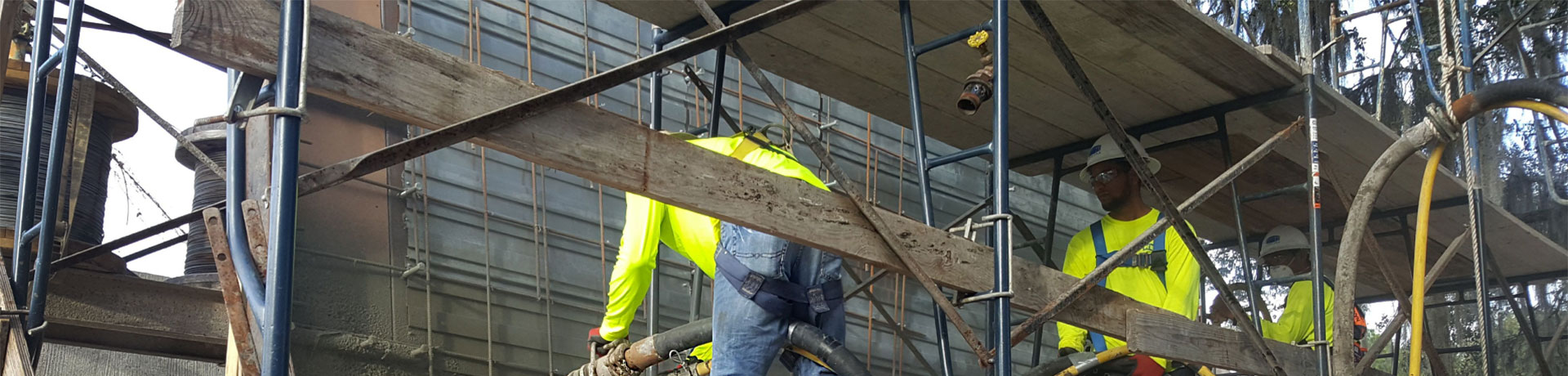
#1 – Spraying Shotcrete Overhead in Underground Applications
Sorry, we don't have any articles to show you. We will add relevant articles as they become available.
ASA Outstanding Shotcrete Awards Program
The ASA Outstanding Shotcrete Project Awards Program exists to recognize excellence and innovation on projects in which the application of shotcrete has played a significant role.
ASA’s Annual Outstanding Shotcrete Project Awards Program provides an exciting real-world demonstration of the exceptional advantages of placing concrete via the shotcrete process. Many sustainability advantages are also inherent in the shotcrete process and play a significant role in winning projects as well as the project owner’s ultimate decision to use shotcrete as the method of concrete placement. Projects can be submitted in the following areas:
- Underground
- Architecture | New Construction
- Infrastructure
- International Projects
- Pool | Skatepark
- Repair | Repurpose
To assist in your submission, we have provided submission resources to inform you of the submission guidelines, a list of questions, and a copy of the owner release form. Please email any questions to [email protected].
Award Archive
2025 – Twenty First Annual Outstanding Shotcrete Project Awardees
Mapei’s London Underground Bank Station’s Capacity Upgrade
Deep in the heart of London’s financial centre, work has been continuing to make one of the world’s largest stations safer and easier for passengers to use. Finding your way around the existing labyrinth of tunnels, connecting five London underground lines, is a task worthy of the most experienced navigator.
Advances in Shotcrete Technology for Ground Support in Tunnels and Mines in North America
In recent years, shotcrete has been widely used for ground support in civil tunnels and mines in North America. Shotcrete technologies have advanced with robust robotic sprayers, high-performance shotcrete mixture designs, and high-performance fiber reinforcement in conjunction with rigorous qualification of shotcrete nozzlemen and QC inspection and testing programs. Design engineers and contractors are using shotcrete more and more often for various underground applications including ground support and final linings in tunnels in soft ground and hard rock mines, as well as in repair and rehabilitation projects in railway tunnels and other underground openings. Large underground caverns have been constructed using shotcrete as the initial liner in San Francisco and Los Angeles, and for both the initial liner and final liner in New York and Washington D.C. This article focuses on recent underground shotcrete technology developments from project experience and provides lessons learned. It also demonstrates that proper quality control and shotcrete qualification programs are critical for successful shotcrete projects.
Earth and rock excavations are effectively stabilized with shotcrete and a variety of reinforcement and anchoring systems. Using shotcrete to stabilize soil for excavation has advantages over traditional timber and steel shoring techniques. Shotcrete is also ideal for ground support in tunneling and mining. It provides early ground support after blasting or excavating; early strength development, which provides flexibility to allow for ground stabilization and stress relief; and offers the ability to conform to the natural irregular profile of the ground without formwork, making it ideal for any tunnel. It is also the preferred material/process for underground stations, side drifts, and shops, and provides long-term stability. It can be used as a final or permanent lining for underground structures.
The ASA Technical Questions and Answers is a free service offered to all users, but primarily intended for engineers, architects, owners and anyone else who may be specifying the shotcrete process and/or has need for a possible answer to a technical question.
User agreement: The answers provided to submitted questions are intended for guidance in planning and executing shotcrete applications. This information is intended only for the use of individuals who are competent to evaluate the significance and limitations of its content and recommendations, and who will accept responsibility for the application of the material it contains. The American Shotcrete Association provides this information based on the best knowledge available to them and disclaims any and all responsibility for the information provided. The American Shotcrete Association will not be liable for any loss or damage arising therefrom.
If you are unable to find what you are looking for in the archive, then submit a new technical question.
We have a wet-mix shotcrete steel fiber overhead application progressing in our state. The question is about the use of a steel trowel finish, as opposed to say a magnesium or wood float finish. In the ASA Shotcrete Inspector seminar, it was stated that a steel trowel is less durable, reduces freeze-thaw resistance and shows cracking more proximately. As this particular application is overhead and, in a tunnel, there is not as much of a concern with water infiltration and the associated freeze-thaw exposure. We usually don’t allow steel trowels for flat work, due to deicing salts, but that concern wouldn’t apply here. My superintendent has asked me to reach out to you to see if you might have any further detailed advice on this type of application. Construction is wanting a smooth finish and looks do matter here as it is a high-profile project. If the DOT were to allow the steel trowel for finishing, what would be your concerns or suggestions to this approach?
Freeze-thaw deterioration is dependent on the concrete being saturated in multiple freezing/thawing cycles. In an overhead application, where water can’t stand on the surface, the concrete can’t be saturated unless water permeates through from the upper surface. And with good quality concrete in the tunnel, water shouldn’t permeate through, so it should be functionally watertight. As a result, freeze-thaw likely isn’t a critical durability issue.
A steel trowel finish does require extra working of the surface and would require the contractor to be very attentive to the proper time to obtain the finish yet not overly disturb the fresh concrete. Gravity is working against the overhead concrete staying in place.
Having a smooth steel trowel finish would make minor shrinkage cracks more noticeable. However, in the tunnel without exposure to sunlight or much wind exposure, and with proper attention to curing, perhaps surface cracking will be minimal.